
In this guide
- Nail polish is a cosmetic: no FDA approval before sale, except for most color additives.
- Salon-only products do not have to list ingredients unless they are also sold at retail.
- 3-free means no toluene, formaldehyde or dibutyl phthalate, nothing more.
Pick up a bottle of polish in a Pittsburgh drugstore and turn it over, and you will find a long list of chemical names. Pick up the same color at a salon station and there may be no list at all. Both are allowed. This guide explains how nail products are regulated in the United States, which ingredients draw the most questions and what the free-from labels on many bottles actually promise.
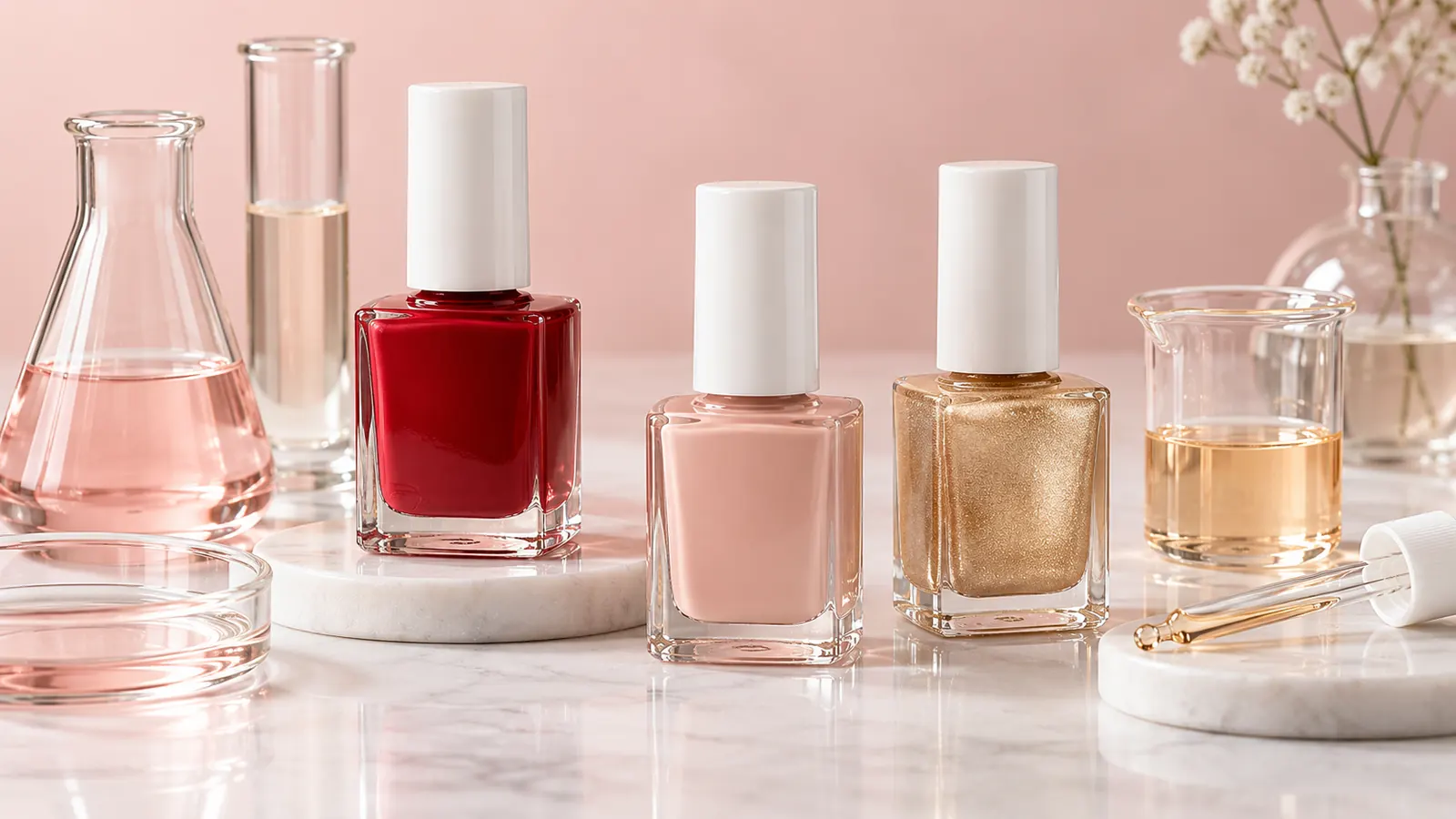
How nail products are regulated
The FDA regulates nail products sold for home and salon use. Under the Federal Food, Drug, and Cosmetic Act most are cosmetics. Products meant to treat a medical problem, such as nail fungus, are drugs and follow different rules.
Cosmetics, including nail products, do not need FDA approval before they go on sale, with the exception of most color additives. The law still requires them to be safe when used as directed or in the usual way, and the FDA can act against products and companies that break the law. The FDA points out that many nail products contain ingredients that would be harmful if swallowed but are safe on the nail, because the nail is a barrier that prevents absorption.
Labels are where the rules differ. Every cosmetic label, whether sold to consumers or to salons, must carry a warning whenever one is needed to prevent a health hazard. Cosmetics sold at retail, in stores or online, must also list their ingredients in descending order. That ingredient list is not required for products used only in salons or for free samples, unless the same product is also sold at retail, even if it says For professional use only.
Tip: If you want to know what is going on your nails at a salon, ask to see the bottle. If the product is also sold in stores, the ingredient list will be on it.
The ingredients people ask about
| Ingredient | Where it is used | What the FDA and OSHA say |
|---|---|---|
| Formaldehyde | Some nail hardeners and polishes; may be listed as formalin or methylene glycol | Hardens nails, but frequent use can make them brittle; can irritate skin and cause allergic reactions. OSHA notes it can cause cancer and breathing problems for workers |
| Toluene sulfonamide/formaldehyde resin (TSFR) | Some polishes, for a tough, glossy coat | Some people may become allergic to it |
| Dibutyl phthalate (DBP) | Some polishes and hardeners, as a plasticizer | Used mostly below 10%; the FDA’s 2010 survey found it in only a few polishes |
| Toluene | Some polishes, hardeners and removers, as a solvent | Use is being phased out; an industry safety panel found it safe in nail products up to 50% |
| Acetone | Polish remover | OSHA lists headaches, dizziness and irritated eyes, skin and throat for workers exposed to it |
Two cautions sit behind that table. First, the FDA’s safety discussion is about customers using products as directed. OSHA’s lists describe what salon workers can experience, because they handle these products all day, often several at once and sometimes in poorly ventilated rooms. Second, the Cosmetic Ingredient Review panel cited for toluene is an independent panel funded by the industry; the FDA takes part without voting and says its own conclusions may differ.
Formaldehyde, in more detail
Formaldehyde works in nail hardeners by bonding with keratin, the protein that makes up the nail. That is how it hardens nails, and also why, according to the FDA, using these hardeners often can make nails brittle and more likely to break or peel. Products with formaldehyde can also irritate the skin or cause allergic reactions. Other polishes use resins, such as TSFR, that form a strong coating instead of changing the nail.
If you are allergic to formaldehyde, or have reacted to a nail product before, the FDA’s advice is to read the ingredient list for formaldehyde and its related names: formalin, methylene glycol and toluenesulfonamide/formaldehyde resin.
What 3-free and similar labels mean
OSHA explains that toluene, formaldehyde and dibutyl phthalate are sometimes called the toxic trio in the industry, and that products made without them are often called 3-free. You will also see higher numbers on bottles, as brands list more ingredients they leave out.
A free-from label tells you what is not in the bottle, not that everything left is harmless. OSHA advises reading product labels and safety data sheets and following the maker’s instructions for all salon products, including those labeled free of hazardous chemicals. It also warns that a safety data sheet may not contain all the information needed to protect yourself.
Using polish safely at home
The FDA’s general advice for nail products is short:
- Read the label and follow any warnings.
- Keep products away from flames and heat: some catch fire easily near a stove pilot light, a lit cigarette or a hot curling iron.
- Keep them out of your eyes and out of children’s reach, since some are harmful if swallowed.
- Use them with good ventilation.
- If you have a reaction, tell your doctor and report it to the FDA.
At the salon, the air matters as much as the bottle. Our guide to That Nail Salon Smell: Ventilation, Dust and What OSHA Recommends explains what to look for. For acrylics and gels, which raise a different set of questions, see Gel, Dip, Acrylic or Builder Gel: How the Options Differ and What the FDA Says.