
In this guide
- Acrylics and gels are built from methacrylates; allergy is the main concern.
- The FDA advises keeping these products off your skin.
- Methyl methacrylate monomer is still used occasionally, the FDA says.
Look at almost any salon menu in Pittsburgh and you will see the same words: gel, dip, acrylic, builder gel, structured gel, Gel-X, BIAB. Our salon directory alone lists most of them. The names overlap, the prices differ, and it is not always clear what you are choosing. This guide sorts the options and then looks at the part that matters for your health: what the products are made of.
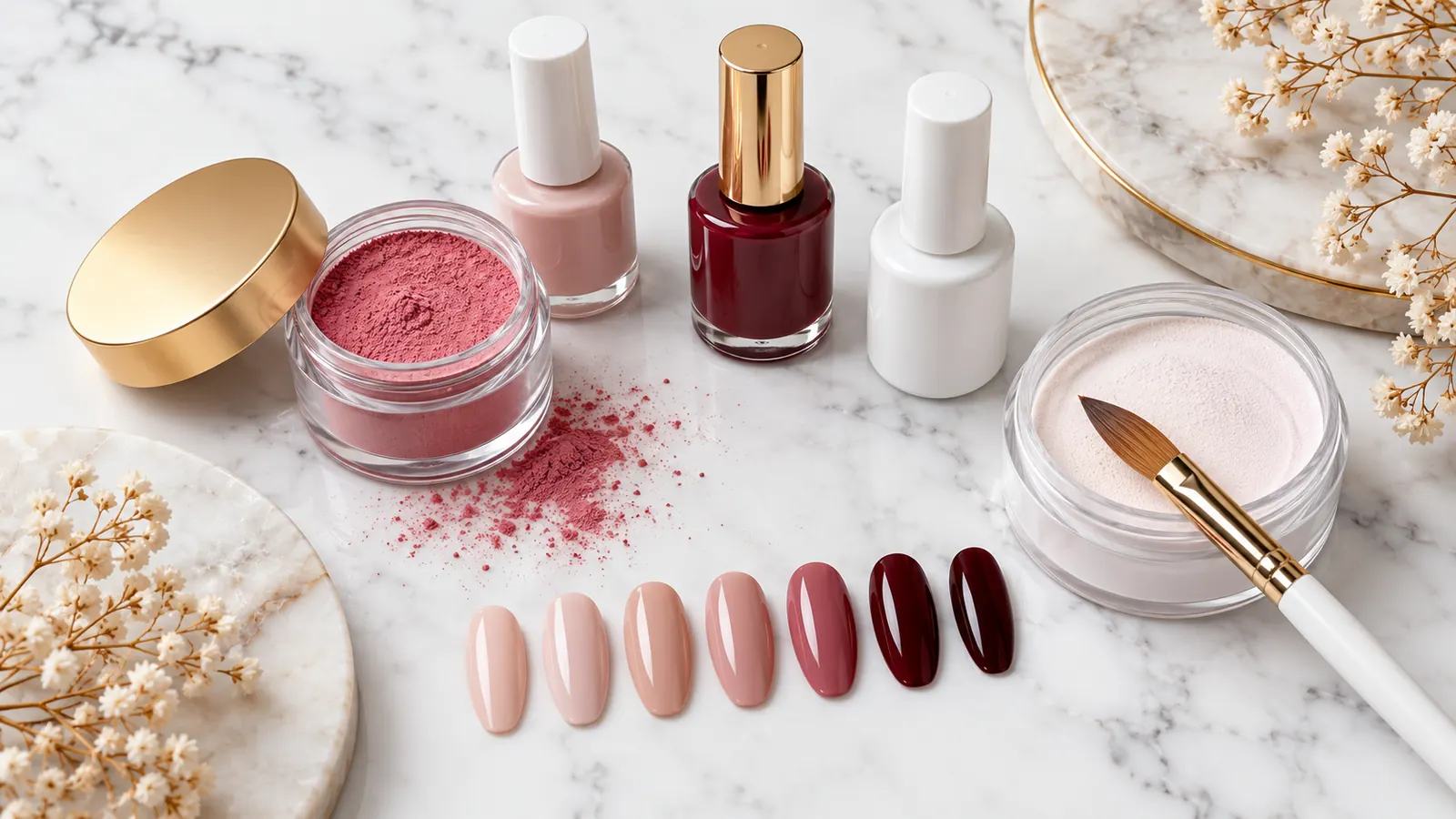
The options in plain terms
Regular polish
Ordinary nail polish dries in the air as its solvents evaporate. It comes off with a standard remover. It is the simplest service and the one most likely to chip within days.
Gel polish
Gel polish goes on like a polish but is cured, or hardened, under a lamp. It lasts longer than regular polish and needs a proper removal rather than a quick wipe. Several Pittsburgh salons also list rubber gel, a thicker gel base.
Builder gel, structured gel and BIAB
These are thicker gels used to add strength and shape to your own nail, as an overlay, or to build length. Salons use the names differently: one in our directory includes structured gel in its e-file manicure, others list builder gel overlays and builder gel extensions as separate services. BIAB is a name some salons use for a builder gel overlay.
Dip powder
Dip powder systems layer a colored powder over a liquid base, then seal it. Salons list it on its own or with tips for extra length.
Acrylic
Acrylic nails are made by mixing a liquid with a powder that hardens into a tough layer, shaped over your nail or a tip. They are the classic artificial nail and usually need regular fills as the nail grows.
Gel-X and other soft gel tips
Gel-X and similar systems use pre-shaped soft gel tips attached with gel and cured. Salons list full sets and refills.
Tip: When you book, say whether you have an old set to remove. Many salons charge for removal separately, and one in our directory asks clients with gel from another salon to book a removal as well.
What acrylics and gels are made of
The FDA explains that artificial nails are made mainly of acrylic polymers, formed by reacting acrylic monomers, such as ethyl methacrylate, with polymers such as polymethylmethacrylate. When the reaction is finished, traces of the monomer are likely to remain.
The FDA describes the polymers themselves as typically quite safe. The concern is the leftover monomer. In people who have become sensitive, or allergic, to methacrylates, those traces can cause redness, swelling and pain in the nail bed. That is why the advice from the FDA comes down to one habit: keep the product off your skin to reduce the chance of an allergic reaction.
The story of MMA
You may hear salons advertise that they do not use MMA. Methyl methacrylate monomer has a history. The FDA says that in the early 1970s it received a number of injury complaints linked to artificial nails containing methyl methacrylate monomer, including nail damage and deformity and skin inflammation. Ethyl methacrylate was not linked to those injuries. The FDA went to court to remove products containing 100 percent methyl methacrylate monomer from the market.
The FDA is also clear that no regulation specifically prohibits methyl methacrylate monomer in cosmetics, and that it is still used occasionally in some artificial nail products. OSHA, writing about nail salon workers, notes that methyl methacrylate is banned for use in many states and lists asthma, irritation of the eyes, skin, nose and mouth, difficulty concentrating and loss of smell among its possible effects. OSHA lists similar effects for ethyl methacrylate, the more common artificial nail liquid, and says exposure during pregnancy may affect the child.
For a customer, the practical point is that the air in the salon and the product on your nail are both part of the picture. Our guide to That Nail Salon Smell: Ventilation, Dust and What OSHA Recommends covers the air.
Primers and removers
Two other products are worth a mention. Some nail primers contain methacrylic acid, which helps acrylic nails stick. The FDA notes that cases of poisoning and injury led the Consumer Product Safety Commission to require child-resistant packaging for certain household products, including these primers. And artificial nail removers consist mainly of acetonitrile; child-resistant packaging is required for liquid removers with more than 500 milligrams of it in a container. Both are worth keeping well away from children at home. Our guide to Removing Gel, Dip and Acrylic Nails Safely, at the Salon or at Home covers removal.
How to choose
- If you want something simple and easy to change, regular polish or gel polish is the light option.
- If your own nails break easily, ask about a builder gel overlay, which adds strength without length.
- If you want length, the choice is usually between acrylic, Gel-X style tips and builder gel extensions.
- If you have ever had redness, swelling or pain around the nail after a gel or acrylic service, tell your technician before the next one and see a healthcare provider.
Whatever you choose, the FDA’s rule for any reaction applies: tell your doctor, then report it to the FDA. And use the Salons to compare which salons near you list the service you want.