
In this guide
- Every Pennsylvania nail salon must have a pedicure basin, a nearby sink and a first aid kit.
- Fungal nail infections spread through shared surfaces and objects like towels.
- A technician must turn away a client they believe has a contagious condition.
A pedicure is the service where hygiene matters most. Feet spend time in shared water, tools work close to the skin and calluses, and the fungi behind athlete’s foot and most fungal nail infections spread easily on damp surfaces. None of that means you should avoid pedicures. It means it is worth knowing what a Pennsylvania salon is required to have, and what you can do on your side.
What every salon must have for pedicures
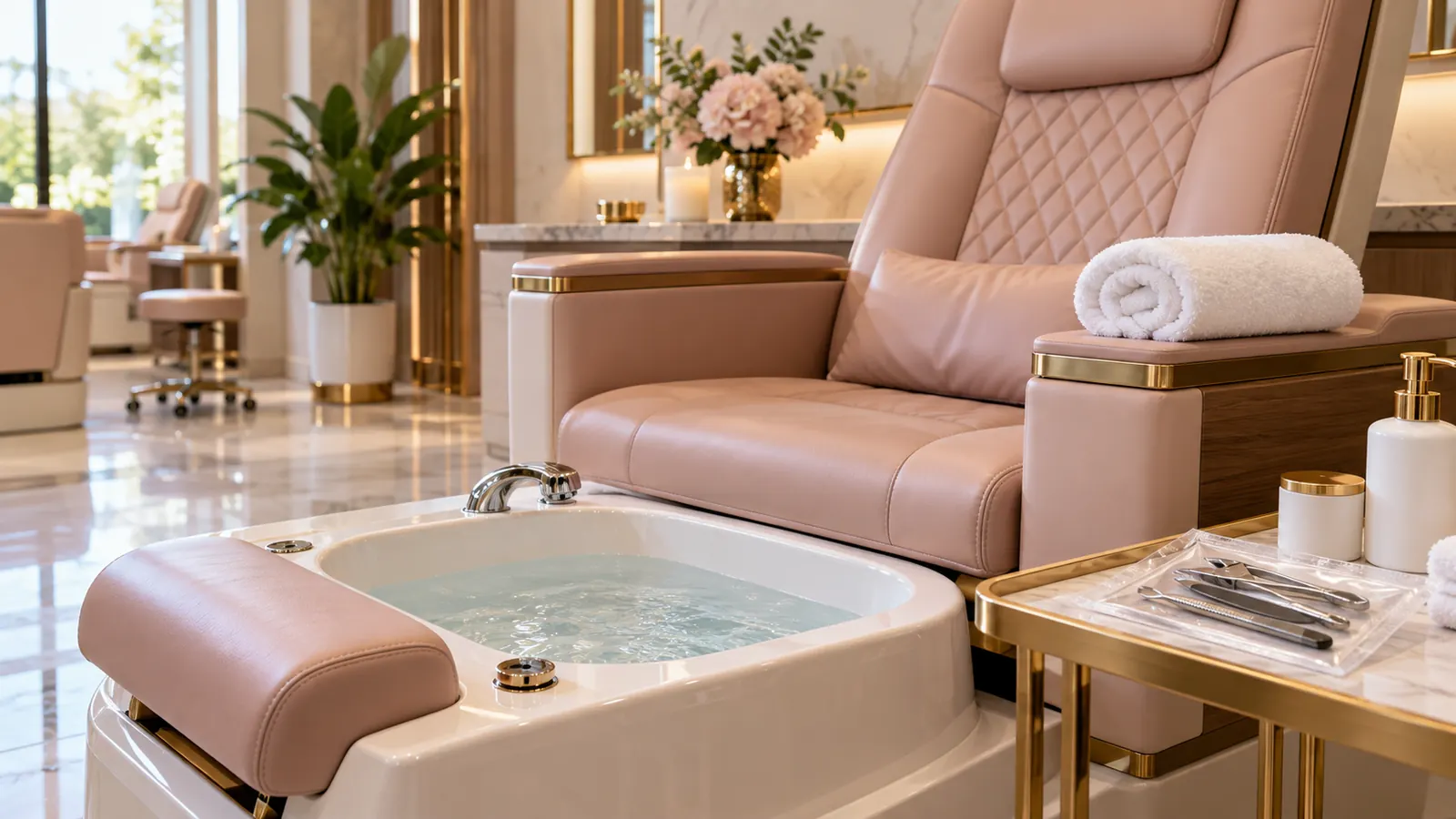
The State Board of Cosmetology sets the minimum equipment for a nail technology salon. For pedicures, that includes a pedicure basin and stand, a chair used for manicures and pedicures, and a sink with hot and cold running water that is readily accessible to each work station. The minimum is for a salon with one technician; the rules say equipment must increase with each additional technician so each one can work safely and efficiently.
The same list requires a labeled first aid kit with specific contents. Among them are an antiseptic, protective gloves, a blood spill kit, a hazardous waste bag, eyewash, burn ointment, bandage strips and sterile gauze pads. A cut during a pedicure is not unusual, and the kit is there so it can be handled cleanly.
The tools that touch your feet
Pennsylvania’s rule on tools applies to pedicures exactly as it does to manicures: any tool, instrument, utensil or appliance that comes into contact with a client must be sanitized immediately after each use and kept sanitary at all times. A salon must also have a wet sanitizer and a closed container for sanitized implements.
Some salons go further than the minimum. In our salon directory you will find salons that describe a dry, waterless pedicure done with an electric file and disposable abrasive files, and one that says it uses a disposable liner for each customer. Those are the salons’ own descriptions, but they show the options exist if shared water bothers you.
How fungal nail infections spread
The CDC explains that athlete’s foot, jock itch and most fungal nail infections are forms of ringworm, an infection caused by fungi rather than a worm. Nail infections can make nails change color, become thick and break easily. They are much more common in toenails than in fingernails.
According to the CDC, the fungus can get into cracks in the nails and cause infections. Ringworm spreads through skin-to-skin contact, through shared objects like towels and bedsheets, and through shared surfaces like locker room or public bathroom floors. The CDC lists walking barefoot in shared spaces, wearing tight shoes and socks, and heavy sweating among the risk factors.
That is why the towel rules in a salon matter as much as the tools. Pennsylvania requires clean cloth or unused paper towels for every client, with used ones going straight into a closed container or a covered bin.
When a salon should say no
Pennsylvania’s rules require a licensee to refuse to serve a client they believe has an infectious, contagious or communicable disease, unless the client produces a physician’s certification that they do not. The Cosmetology Law backs this up: a licensed technician who knowingly serves someone with a contagious or infectious disease commits a summary offense, as does one who passes on an infection through carelessness or negligence.
So if your technician looks at a toenail and declines to work on it, take it as a sign the salon takes the rules seriously. A thick or discolored nail is a reason to see a healthcare provider, not to have it buffed down. Our guide to Thick, Discolored or Brittle Nails: Fungal Infections and When to See a Doctor explains what the CDC recommends.
Tip: If you have an open cut, a scrape or an infection on your feet, move your pedicure. Broken skin is an easy way in for germs.
Your side of the deal
A few habits lower your own risk, most of them taken straight from the CDC’s prevention advice for ringworm:
- Keep your feet clean and dry, and change socks every day.
- Wear sandals or other protective footwear in shared wet areas, including salon floors between the basin and the drying station.
- Do not share towels, files or clippers at home.
- Keep nails short and clean.
- Watch the setup: tools from a closed container, a fresh towel and a basin that has been cleaned before you arrive.
After the pedicure
Redness, swelling or pain around a toenail in the days after a pedicure deserves attention. If it looks like an infection, see a primary care provider, dermatologist or podiatrist. If you think a product caused a reaction, tell your doctor and report it to the FDA, which regulates nail products as cosmetics.
If the problem was the salon’s practice, such as reused tools or a dirty basin, you can file a complaint with the Pennsylvania Department of State. The steps are in Filing a Complaint About a Pennsylvania Nail Salon or Technician. And for the rest of the room, our What a Clean Nail Salon Looks Like Under Pennsylvania Rules checklist takes five minutes.